Standards give the work a common language. Design studies make that language usable on a real operator screen. This page shows both—and keeps recommendations separate from references we directly applied.
Applied standards
2
Design boards
4
Related references
10
How to read this page
Provenance without overclaiming.
01
Applied reference
A standard or public framework demonstrably used to guide the live library.
02
Internal study
A KonnectSymbols-created board used to compare geometry, state, and consistency.
03
Further reading
Relevant industry material offered for context, never presented as direct provenance.
Used in our work
Applied references
These references shaped the decisions behind a live symbol pack. Publisher excerpts below come from public official descriptions, not from the paid standards themselves.
Applied referenceISA-101.01-2015
International Society of Automation
Human Machine Interfaces for Process Automation Systems
Official overview free · standard purchase or member access
Publisher description
“provide a trusted roadmap for designing, implementing, operating and maintaining Human Machine Interfaces (HMIs) in modern process automation systems.”
Relevant to
High Performance P&ID
How we applied it
We translated its human-centered HMI direction into quiet default states, restrained color, redundant abnormal-state cues, and consistent light/dark operator canvases.
Standards establish a shared vocabulary. KonnectSymbols makes deliberate product and rendering choices within that vocabulary.
High Performance P&ID
Quiet until the process needs attention
Default equipment stays low contrast. Brightness carries active state, while compact color-and-shape marks distinguish priority alarms, faults, interlocks, and out-of-service equipment.Browse High Performance P&ID →
P&ID Schematic
A consistent line language, not a pasted icon set
Valves, instruments, piping, and equipment share stroke rules and readable silhouettes. Editable states extend the drawing vocabulary without pretending to replace a project drafting specification.Browse P&ID Schematic →
Shared ISA tagging
Identification travels with the equipment
Common guided patterns, custom project-approved identification letters, loop numbers, and mount conventions use the same controls across Industrial Rendered, High Performance P&ID, and P&ID Schematic symbols. The site does not reproduce the publisher's abbreviation tables.Browse Industrial Rendered →
KonnectSymbols working references
Internal design studies
Preview-only records of the boards used to make and review the current packs. They are our interpretation—not pages from an ISA, IEC, or ISO publication.
Collection 01
P&ID complete reference
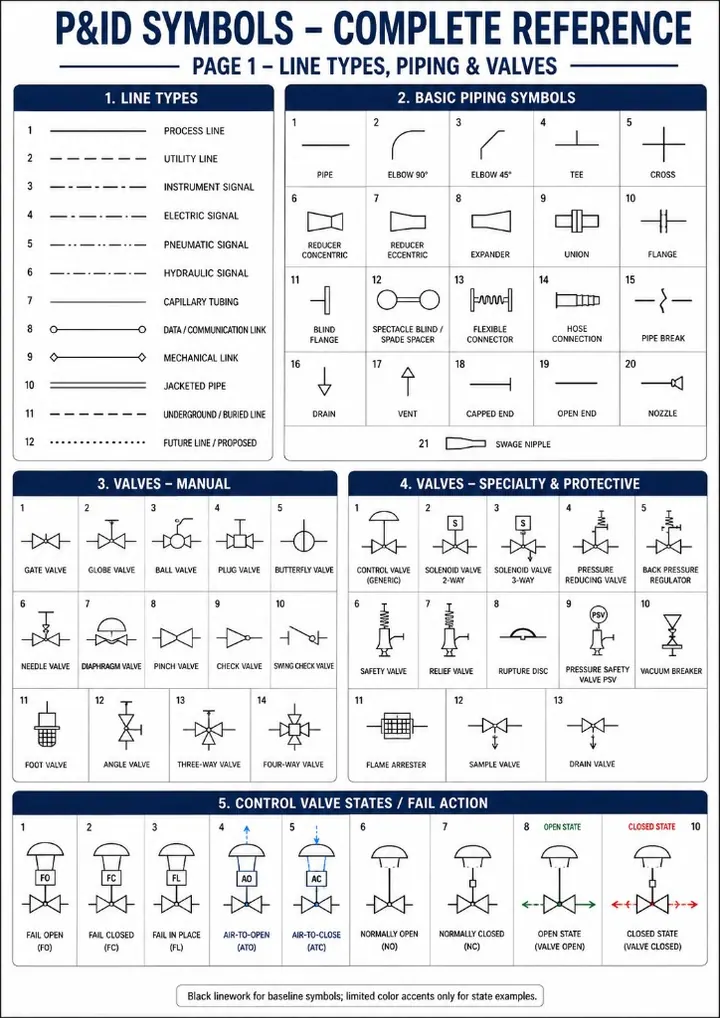
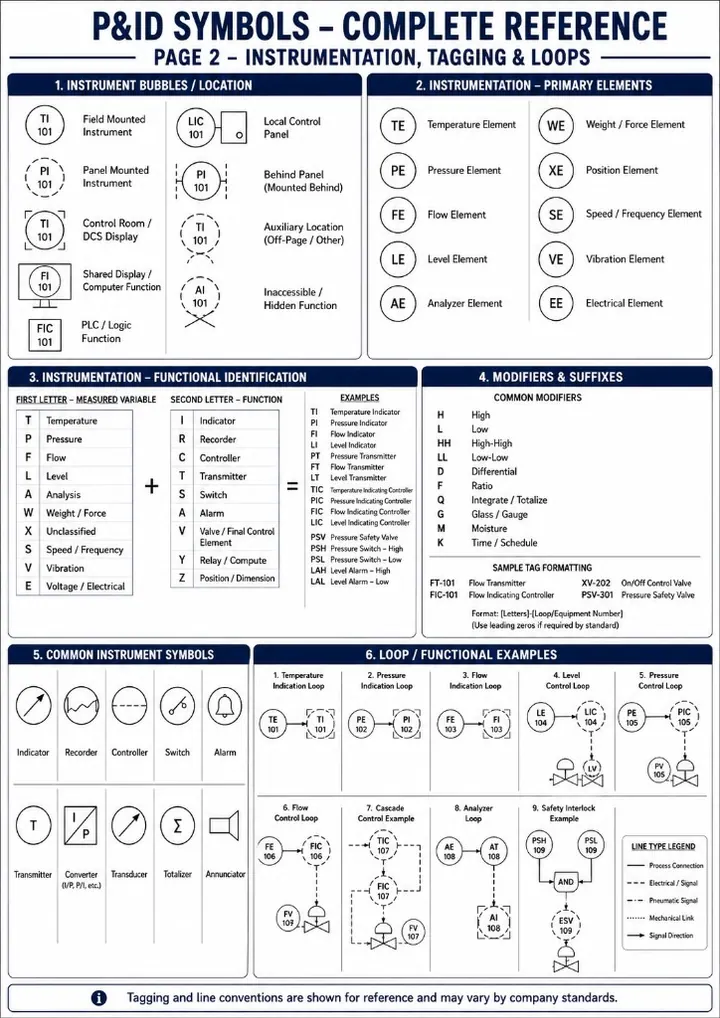
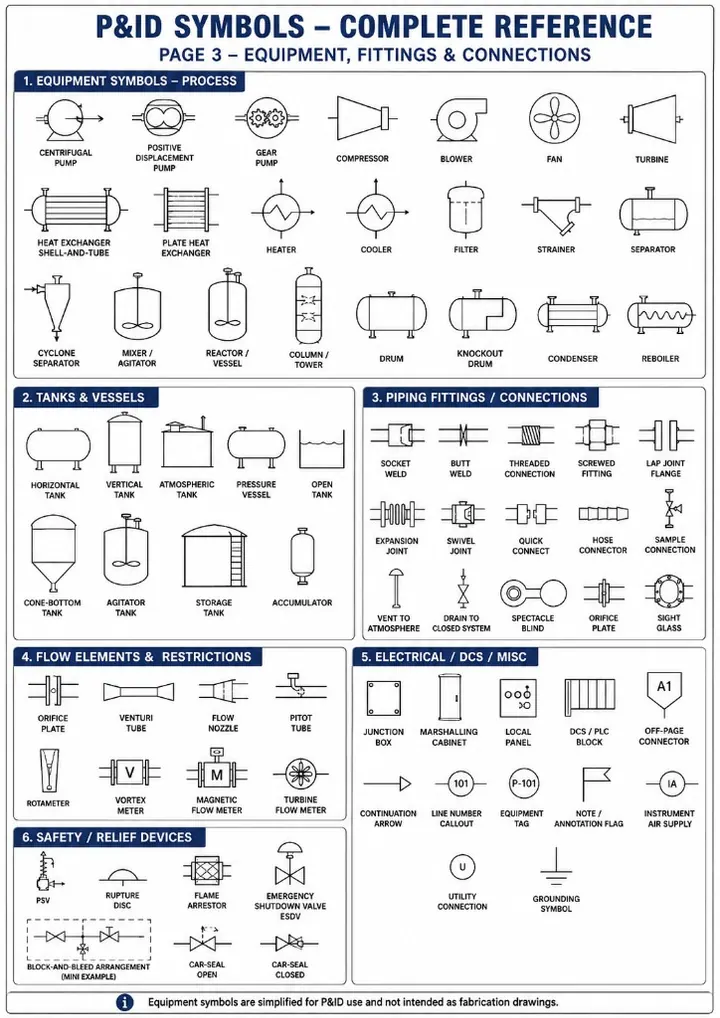
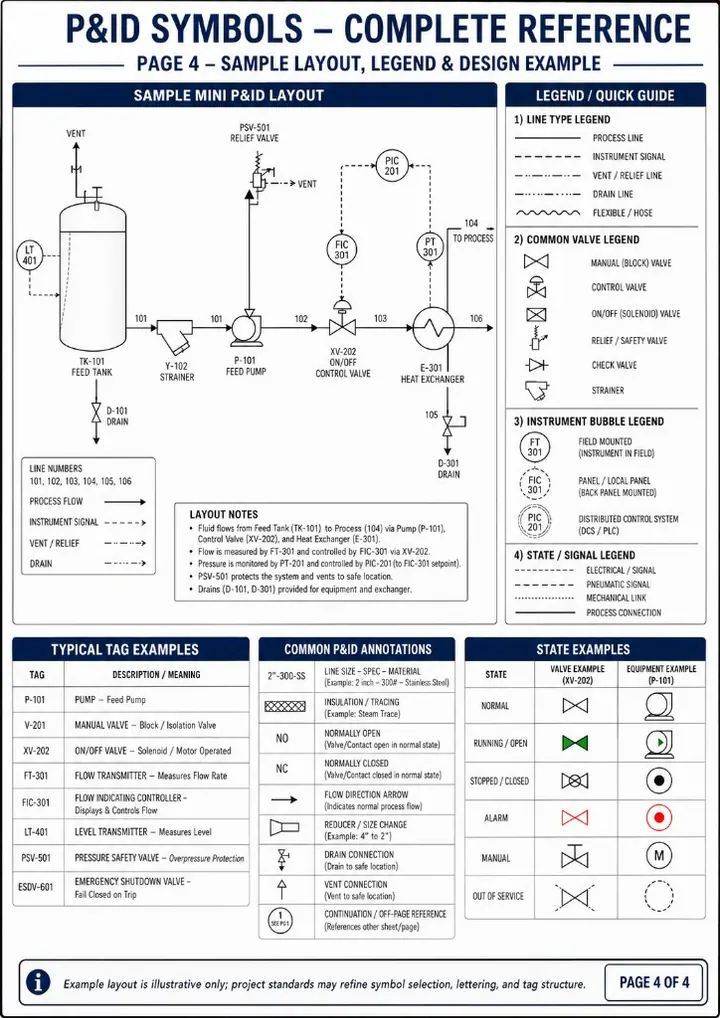
The four-page visual authority used to keep line types, instruments, equipment, fittings, and live states consistent across the P&ID pack.
Preview only
Lines, piping and valvesLine types, pipe fittings, valve silhouettes, fail actions, and open/closed examples.
Preview only
InstrumentationInstrument bubbles, identification letters, mounting conventions, and loop notation.
Preview only
Equipment and fittingsProcess equipment, vessels, fittings, flow elements, electrical, and safety symbols.
Preview only
Live-state legendNormal, open, closed, running, stopped, alarm, manual, and out-of-service states.
Context, not provenance
Further reading
These references are useful next stops for engineering teams. Their inclusion does not mean they were used to draw the current catalog.
HMI systems3 references
Further readingISA-TR101.01-2022
International Society of Automation
HMI Philosophy
Official overview free · report purchase or member access
Publisher description
“offers practical guidance for developing a comprehensive HMI philosophy.”
Relevant to
HMI governance
Style guides
Why it is useful
Useful when turning a symbol library into a site-wide philosophy with ownership, conventions, and lifecycle controls.